A society reveals what it values by the stories it preserves. When women’s voices are recorded with dignity, their lives become more than memories—they become history, guidance, inheritance, and possibility.
Every woman carries a private archive.
It exists in the decisions no one witnessed, the sacrifices rarely discussed, the traditions carefully maintained, the ambitions postponed and later reclaimed, the relationships repaired, the businesses built, and the families held together through seasons of uncertainty.
Some women preserve their stories through letters, photographs, recipes, journals, heirlooms, and family rituals. Others leave traces of themselves through the people they taught, protected, encouraged, or inspired.
Yet countless women pass through history without their full stories ever being recorded.
Their names may remain within a family, but the complexity of their lives gradually disappears. Their courage becomes a simplified memory. Their wisdom is reduced to a familiar phrase. Their struggles are forgotten, and future generations inherit the results of their labor without understanding the woman who made those results possible.
This is why women’s stories matter.
They do more than describe the past. They help women understand the present and imagine a more expansive future.
History Has Never Been Entirely Neutral
History is often presented as an objective record of what happened.
But every historical record is shaped by choices.
Someone decided whose words were important enough to preserve. Someone selected which achievements deserved documentation, which lives were considered influential, and which experiences belonged in public memory.
For centuries, women were frequently present in history without being fully represented within it.
They supported political movements, contributed to scientific discoveries, built family enterprises, practiced medicine, preserved culture, raised future leaders, created art, organized communities, and sustained households through war, migration, poverty, and social transformation.
Their work was essential, yet often described as secondary.
The public record celebrated visible authority while overlooking the labor that made society possible.
As a result, many generations inherited an incomplete understanding of women’s influence.
Preserving women’s stories is not simply an act of appreciation. It is a correction of the historical record.
The Extraordinary Within Ordinary Lives
Not every meaningful woman will become famous.
She may never lead a major company, hold public office, publish a book, or receive an award. Her name may never appear in a newspaper.
Still, her life may contain extraordinary significance.
She may have immigrated with little security and created a stable future for her children.
She may have remained in school when education was discouraged.
She may have rebuilt her life after loss.
She may have cared for a family member for many years while maintaining a household and career.
She may have established a small business that supported several generations.
She may have challenged an unjust tradition quietly, creating freedoms her daughters would later consider ordinary.
The value of a story should not be determined only by public recognition.
Some of the most consequential acts occur far from public attention.
A woman’s life can transform a family, neighborhood, profession, or community without ever becoming widely known.
When such stories are recorded, they challenge the idea that significance belongs only to the famous.
They remind us that history is also built in kitchens, classrooms, clinics, studios, small businesses, places of worship, and conversations between generations.
The Stories Families Lose
Every family contains stories that seem unforgettable until the people who remember them are gone.
A grandmother’s childhood.
The reason a family left one country and began again in another.
The first business a mother created.
The private difficulty hidden behind a public success.
The meaning of a piece of jewelry.
The origin of a family tradition.
The advice a woman received at a turning point in her life.
These details may be repeated informally for years. Because they feel familiar, no one believes they are in danger of disappearing.
Then time moves forward.
Names are forgotten. Dates become uncertain. Photographs remain without explanations. Objects survive while their stories vanish.
Preservation does not require an elaborate historical project.
It can begin with a conversation.
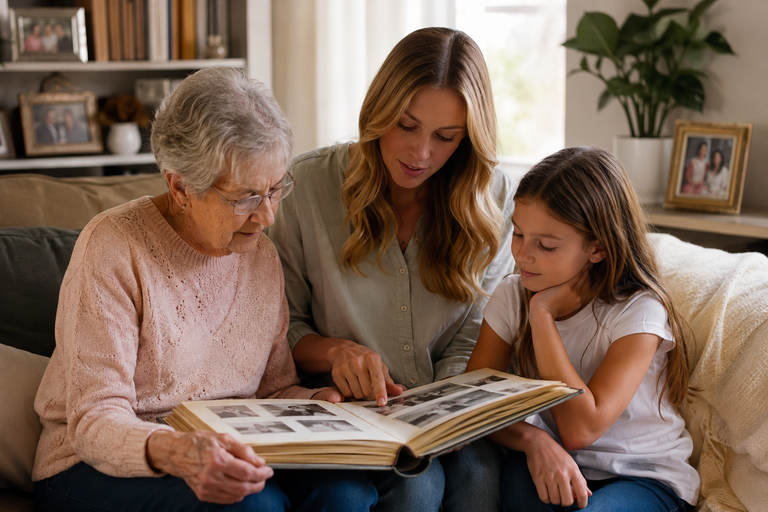
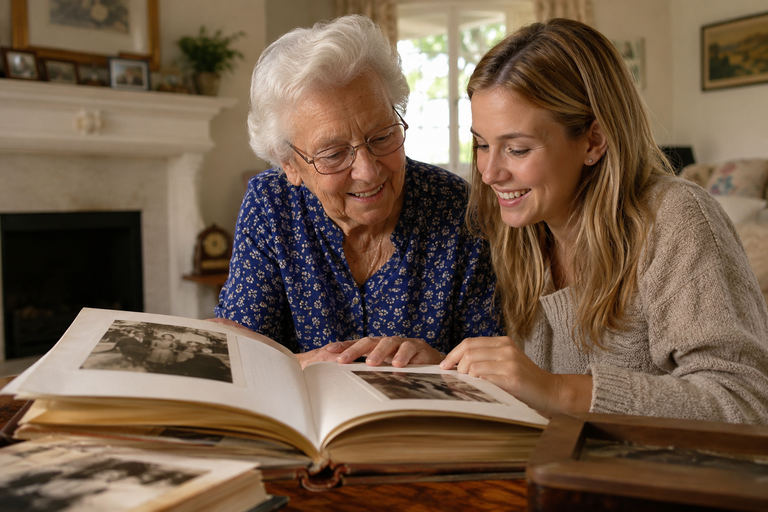
Ask a mother, grandmother, aunt, mentor, colleague, or family friend about the life she lived before everyone knew her in her current role.
Ask what she dreamed about when she was young.
What frightened her.
What changed her.
What she wishes she had understood earlier.
What she sacrificed.
What she is proud of.
What she hopes future women in the family will never have to endure.
One thoughtful conversation can recover a world that might otherwise disappear.
Women Are More Than the Roles We Remember
Family memory often reduces women to their relational titles.
She was someone’s mother.
Someone’s wife.
Someone’s grandmother.
Someone’s daughter.
These relationships may have been central to her life, but they do not represent its entirety.
Before she became known primarily through others, she was a person with preferences, ambitions, friendships, private humor, disappointments, talents, contradictions, and unrealized possibilities.
What music did she love?
What work would she have pursued under different circumstances?
What did she believe about love?
What did she regret?
When did she feel most confident?
Which expectations did she obey, and which did she quietly resist?
To preserve a woman’s story fully, we must allow her to exist beyond usefulness and relationship.
She deserves to be remembered not only for what she gave, but for who she was.

The Power of Writing One’s Own Story
Women should not have to wait for others to interpret their lives.
Writing offers a woman the opportunity to become the author of her own experience.
A journal can preserve details that public narratives often overlook: emotional turning points, private doubts, complex decisions, changing beliefs, and the meaning attached to ordinary days.
Writing does not require literary perfection.
It requires honesty.
A woman may begin with a single page:
The story of where she was born.
The first moment she understood her own strength.
A letter to her younger self.
The decision that changed the direction of her life.
The experience of becoming a mother.
The business she nearly abandoned.
The loss that reshaped her.
The woman who influenced her most.
The future she still hopes to create.
Through writing, experience becomes visible.
Confusion can become language. Memory can become structure. Pain can become testimony. Achievement can be acknowledged without apology.
A woman who writes her story does not merely preserve the past.
She claims the authority to define what it meant.
Stories as a Form of Generational Wealth
We usually understand inheritance through money, property, education, or material possessions.
But stories are also a form of wealth.
A family story can provide identity during uncertainty. It can teach a young woman that she comes from people who survived difficulty, created opportunity, and refused to surrender.
Knowing that a grandmother rebuilt her life after profound loss may help a granddaughter understand her own resilience.
Learning that a mother once felt uncertain in her career may make a daughter’s doubts feel less isolating.
Understanding that previous generations faced cultural, financial, or professional limitations can create gratitude without romanticizing hardship.
Stories offer context.
They explain how a family arrived at its present life and what it cost to get there.
They also allow future generations to inherit wisdom without having to repeat every painful lesson personally.
This is generational wealth of another kind: memory transformed into guidance.
The Importance of Difficult Stories
Not every story is comfortable to preserve.
Families often protect themselves through silence. They avoid discussing conflict, discrimination, abuse, illness, financial hardship, estrangement, displacement, or decisions that still produce shame.
Silence can sometimes be an act of survival.
But prolonged silence can also leave future generations struggling with patterns they do not understand.
Difficult stories should be handled with care, consent, and respect. No woman should be pressured to disclose experiences she wishes to keep private.
Yet when a woman chooses to speak, her truth should not be dismissed because it disrupts a preferred family narrative.
Honest storytelling allows complexity.
A family can contain love and harm.
A tradition can contain beauty and limitation.
A woman can feel gratitude for her life while acknowledging what it cost her.
Preservation should not turn women into flawless symbols.
It should allow them to remain human.
The most valuable stories are often those that hold courage and uncertainty together.
Representation Changes What Women Believe Is Possible
Stories do not only preserve what has already happened.
They influence what happens next.
When women see themselves represented as leaders, scientists, artists, mothers, founders, physicians, public servants, caregivers, innovators, and cultural creators, possibility becomes more visible.
A young woman’s imagination is shaped by the examples available to her.
When the only celebrated stories belong to a narrow group of women, many others may conclude that influence, elegance, intelligence, authority, or success do not belong to people like them.
Thoughtful representation expands the public understanding of womanhood.
There is no single correct story of a woman’s life.
Some women will become mothers; others will not.
Some will pursue public ambition; others will create meaningful private lives.
Some will remain deeply connected to tradition. Others will redefine it.
Some will build companies, practice medicine, create art, care for families, enter public service, or move through several identities across one lifetime.
Every honest story creates room for another woman to imagine herself more freely.
The Difference Between Visibility and Exposure
In a culture of constant sharing, visibility can easily become exposure.
Women are encouraged to reveal personal experiences quickly, publicly, and sometimes before they have fully understood them.
But storytelling should not require the surrender of privacy.
A woman has the right to decide which parts of her life belong to the public, which belong to trusted relationships, and which remain entirely her own.
Meaningful visibility is intentional.
It allows a woman to control the context of her story rather than becoming content for someone else’s interpretation.
Preserving stories with dignity means resisting sensationalism.
A woman’s pain should not be used merely to attract attention. Her achievements should not be simplified into inspirational slogans. Her complexity should not be removed to make her easier to celebrate.
The purpose is not to extract a dramatic narrative.
It is to honor the whole person.
Journalism as an Act of Recognition
At its best, journalism does more than report events.
It recognizes lives.
A thoughtful interview can reveal the values behind a woman’s work, the challenges hidden beneath achievement, and the experiences that shaped her worldview.
A profile can introduce readers to a physician whose work has transformed patient care, a mother creating a community initiative, an entrepreneur building opportunity, or an artist preserving cultural memory.
Editorial storytelling has the power to slow down and pay attention.
In a media environment driven by speed, the decision to examine one woman’s life carefully becomes meaningful.
It communicates that her experience is worthy of time.
The strongest women-centered journalism should neither idealize nor diminish its subjects.
It should ask intelligent questions.
It should include context.
It should respect contradiction.
It should present achievement without separating it from humanity.
The Purpose of MomDeva Journal
MomDeva Journal was created to become a home for stories of consequence.
It is not intended to be a temporary collection of trends or superficial commentary. Its purpose is to document women’s ideas, accomplishments, challenges, creativity, leadership, motherhood, culture, wellbeing, and evolving influence with elegance and seriousness.
The Journal seeks to publish stories that deserve to remain valuable after the day they first appear.
Stories that offer knowledge.
Stories that create recognition.
Stories that preserve voices.
Stories that bring women from different professions, generations, and cultures into meaningful conversation.
Through digital and print editions, MomDeva Journal can become an archive of contemporary womanhood—not as one universal experience, but as a rich collection of distinct lives.
A journal has a unique responsibility.
It does not merely respond to the moment. It decides what from the moment deserves to be remembered.
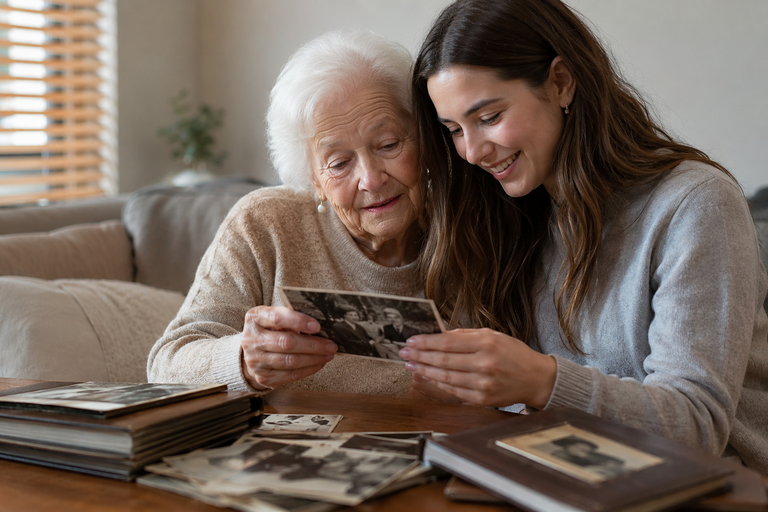
Preserving Your Own Family Archive
Every woman and family can begin preserving stories now.
Record conversations with older relatives, with their permission.
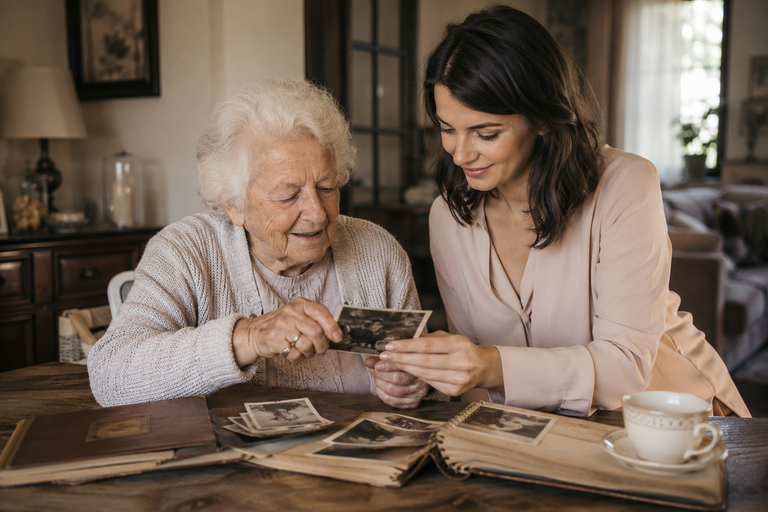
Write names and dates on the back of printed photographs.
Save meaningful letters and explain why they matter.
Document the origins of traditions, recipes, objects, and places.
Create a private digital archive for audio, photographs, and written memories.
Invite children to ask questions.
Write letters for future generations.
Do not wait for a perfect occasion.
Preservation is built through small acts of attention.
The goal is not to record every detail of a life. That would be impossible.
The goal is to protect enough truth that future generations can encounter the person behind the name.
What We Owe the Women Before Us
We owe the women before us more than admiration.
We owe them curiosity.
Many lived within circumstances that limited what they could express, pursue, own, or become. Some made difficult compromises. Others resisted at great personal cost.
To understand them fully, we must look beyond our present-day assumptions.
What choices were actually available to them?
Which risks did they face?
What forms of courage were possible within their world?
What opportunities did they create for women who followed?
Honoring earlier generations does not require pretending that every inherited belief should continue.
Sometimes the most respectful way to carry a woman’s legacy forward is to complete the freedom she could only begin.
The Story a Woman Is Writing Now
Legacy is often discussed as though it belongs to the end of life.
But legacy is created in the present.
It is being written through the work a woman chooses, the way she treats people, the boundaries she establishes, the traditions she continues, the injustices she challenges, and the opportunities she creates for others.
A woman does not need to wait until her life appears historically significant.
Her story is already developing.
The question is whether she is participating consciously in its authorship.
What does she want to be remembered for?
What values are visible in the way she lives?
Which parts of her life require greater honesty?
What knowledge does she want to preserve?
What should future generations understand about her time, her choices, and her hopes?
These questions are not about controlling how others will remember us.
They are about living with greater intention now.
Let Her Story Remain
A society becomes more truthful when women are permitted to tell their own stories in their own voices.
A family becomes richer when it preserves the lives of the women who shaped it.
A young woman becomes more confident when she understands that she belongs to a long history of courage, labor, intelligence, and reinvention.
Women’s stories should not disappear simply because their work occurred quietly.
They should not be reduced to relational titles, sentimental memories, or simplified legends.
They deserve to remain complex.
They deserve to be recorded with care.
They deserve to become part of the inheritance we offer the future.
Because a woman’s story is never hers alone.
It enters the lives of those she raises, teaches, leads, loves, and inspires. It becomes part of a larger cultural memory. It helps future women understand what was possible, what was difficult, and what still remains to be changed.
When we preserve the stories of women, we do more than honor the past.
We make the future more visible.