
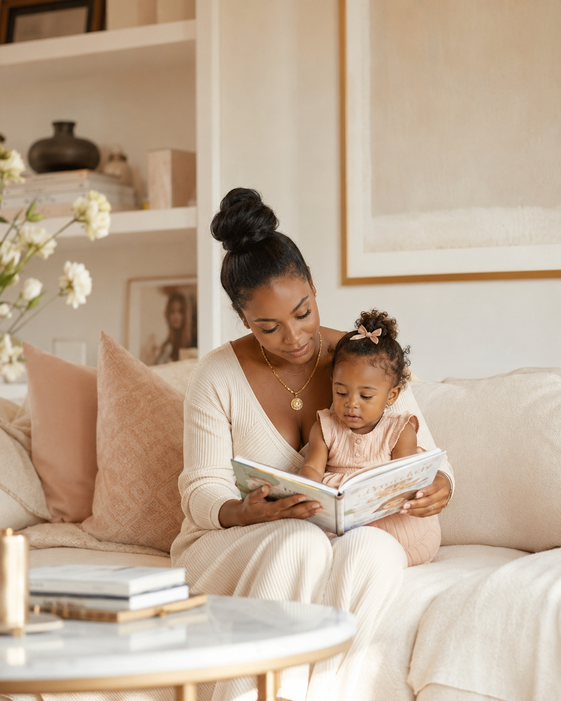
Long before a child understands the world, a mother is quietly shaping the emotional foundation from which that child will learn to meet it.
Motherhood is often described through visible acts.
The meals prepared. The appointments remembered. The clothes washed. The school forms completed. The celebrations organized. The illnesses monitored through sleepless nights.
These responsibilities matter, but they reveal only the outer structure of maternal work.
Beneath them exists another form of labor—less visible, more intimate, and often more consequential.
A mother is continually shaping atmosphere.
Through her words, reactions, boundaries, affection, expectations, and presence, she helps construct the first emotional world her child will know. She teaches what safety feels like, how love is expressed, whether mistakes can be survived, and whether a person’s voice deserves to be heard.
She may perform this work without applause and without ever naming it as leadership.
Yet in many ways, motherhood is humanity’s earliest form of cultural, emotional, and moral architecture.
The First Experience of Belonging
Before children understand language, achievement, status, or success, they understand presence.
They recognize tone.
They feel tension.
They notice whether comfort arrives when they are frightened and whether joy is welcomed when they are delighted.
A mother’s presence does not need to be perfect to be meaningful. Children do not require a flawless emotional environment. They need one in which love is reliable enough, repair is possible, and their existence is not treated as an inconvenience.
The earliest experience of belonging begins with a powerful message:
You are here, and your presence matters.
That message may be communicated through an embrace, a patient response, a familiar bedtime ritual, or the simple act of looking fully at a child while they speak.
These moments appear ordinary.
They are not.
They become part of the inner language children carry into future relationships. They influence what they expect from friendship, partnership, community, and eventually themselves.

The Emotional Work No One Sees
Mothers often carry more than tasks. They carry awareness.
They know which child is unusually quiet.
They remember the upcoming examination, the friendship conflict, the fear that was mentioned briefly three nights earlier, and the disappointment hidden beneath an ordinary answer.
This constant emotional attention is sometimes called the mental load, but even that phrase may not fully capture its complexity.
A mother is not merely remembering information. She is interpreting a family’s emotional climate.
She anticipates needs before they become emergencies. She adjusts plans according to energy, temperament, and circumstance. She may absorb tension to protect stability, translate difficult realities into language a child can understand, and decide when to intervene or allow experience to teach its own lesson.
This labor can be deeply meaningful.
It can also be exhausting.
A society that praises mothers for intuition while providing them insufficient support risks romanticizing the very burden that depletes them.
Maternal care should be honored, but it should not be treated as an unlimited natural resource.
Mothers need rest, partnership, community, financial security, professional respect, and permission to remain fully human.
Motherhood Is Not the Erasure of the Woman
One of the most harmful expectations placed upon mothers is that good motherhood requires complete self-abandonment.
A mother is expected to give endlessly while appearing grateful for the opportunity to disappear.
Her ambition may be questioned.
Her exhaustion may be minimized.
Her body may become public territory for judgment.
Her professional decisions may be evaluated more harshly than those of fathers.
Her desire for solitude, creativity, travel, beauty, romance, or personal growth may be interpreted as evidence that she is insufficiently devoted.
But motherhood does not eliminate womanhood.
A mother remains a person with an inner life.
She continues to have ideas, sensuality, intelligence, private longings, changing opinions, and dreams that belong to her alone.
Children do not benefit from watching a woman erase herself in the name of love. They benefit from seeing that care and identity can coexist.
A daughter who sees her mother pursue meaningful work may learn that ambition is not a betrayal of family.
A son who sees his mother’s time and intellect respected may learn that women are not born to serve without reciprocity.
A child who sees a mother rest may learn that exhaustion is not the price of worthiness.
The way a mother values herself becomes part of what her children learn to value in women.
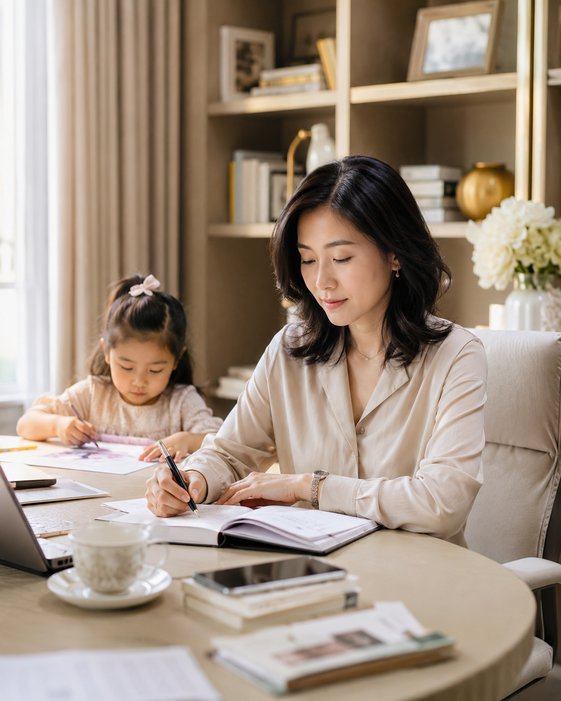
The Difference Between Protection and Preparation
The instinct to protect a child is among the strongest forces in motherhood.
Yet protection alone cannot prepare a child for life.
Children eventually encounter disappointment, rejection, unfairness, conflict, failure, and uncertainty. A mother cannot remove every difficulty without also removing opportunities for resilience.
The deeper task is not to build a world in which nothing painful happens.
It is to help create a person who knows that pain can be faced without losing identity, hope, or dignity.
This requires a delicate balance.
A mother must know when to step forward and when to remain nearby.
When to offer advice and when to listen.
When to solve a problem and when to allow her child to struggle through the process of finding an answer.
Preparation often looks less loving in the moment because it refuses immediate rescue. But it can become one of the most enduring expressions of care.
The goal is not to raise children who never fall.
It is to raise children who understand that falling is not the same as becoming a failure.
The Language Children Carry Forward
A mother’s words can remain in a child’s mind for decades.
Some become sources of strength:
“I trust you.”
“You can begin again.”
“You do not have to be perfect to be loved.”
“Tell me what happened.”
“I am proud of the way you handled that.”
Others become internal wounds:
“Why can’t you be more like someone else?”
“You are too sensitive.”
“You always disappoint me.”
“No one will tolerate you.”
Every mother has moments she regrets. Stress can make patience disappear. Fear can become control. Exhaustion can sharpen language.
Good motherhood is not the absence of mistakes.
It is the willingness to repair them.
An apology does not reduce parental authority. It teaches accountability.
A mother who says, “I should not have spoken to you that way,” offers her child an invaluable lesson: love does not require pretending harm never occurred.
Repair teaches that relationships can survive honesty.
It shows children that strength includes the courage to take responsibility.
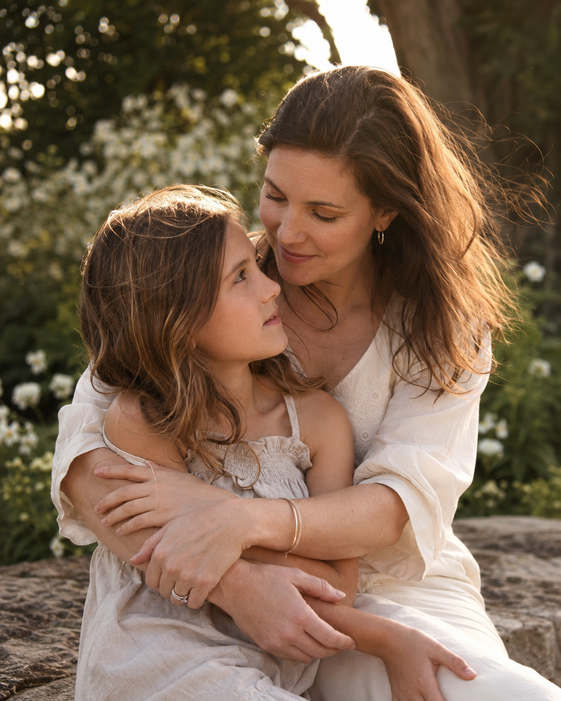
Raising Children Without Losing Connection
Every child eventually moves toward independence.
The toddler insists on doing it alone.
The school-age child begins forming private friendships.
The teenager develops opinions that may challenge family beliefs.
The adult child creates a life no longer centered around the mother.
This progression is natural, but it can also be emotionally difficult.
A mother spends years being essential, then must slowly accept a different form of significance.
The deepest maternal success may ultimately involve becoming less necessary without becoming less loved.
This requires a transformation from control to trust.
A mother cannot remain the director of every decision if she hopes to preserve connection with the adult her child becomes.
She must allow individuality to emerge, even when it arrives in unfamiliar language, style, ambition, or belief.
Children are not extensions of their mothers.
They are separate lives entrusted temporarily to maternal care.
Love must eventually become spacious enough to permit difference.
Working Mothers and the Myth of Perfect Balance
Working mothers are often asked how they “balance everything,” as though life can be divided into equal, stable portions.
In reality, balance changes from day to day.
There are seasons when professional responsibilities demand more attention. There are moments when family needs become urgent. There are days when neither area receives the quality of presence a woman hoped to give.
This does not mean she has failed.
The mythology of perfect balance places women inside an impossible equation: succeed professionally without appearing distracted, and mother devotedly without allowing family life to affect work.
A more honest standard is integration.
Integration means making deliberate choices according to current priorities while accepting that no system will eliminate every conflict.
It also means recognizing that the solution cannot rest entirely upon individual women.
Employers, partners, families, schools, communities, and public institutions all influence whether motherhood and professional life can coexist sustainably.
Working mothers do not need admiration for surviving impossible systems.
They need better systems.
The Mother Who Is Also Becoming
Children are not the only people growing within motherhood.
Mothers change too.
A woman may enter motherhood with one understanding of herself and discover, years later, that she has become someone different.
She may develop greater courage.
She may become more vulnerable.
She may reconsider her career, relationships, values, or definition of success.
Motherhood can reveal unresolved wounds from one’s own childhood. It can raise difficult questions about what should be repeated, what must be repaired, and what ends with this generation.
A mother may find herself offering her child the emotional safety she once needed.
In doing so, she may begin healing parts of herself.
This process is rarely simple. Caring for a child can reopen memories, fears, and patterns that were once easier to ignore.
But motherhood can also become an invitation to conscious change.
A woman is not required to reproduce every tradition she inherited.
She may create new rituals.
Speak with greater tenderness.
Establish healthier boundaries.
Reject silence.
Choose presence over appearances.
She can become the beginning of a different family story.
The Many Forms of Mothering
Motherhood cannot be contained within one image.
It belongs to biological mothers, adoptive mothers, foster mothers, stepmothers, grandmothers, guardians, and women who have become maternal figures through devotion rather than title.
It includes women raising children alone, mothers supported by partners, mothers separated from their children by circumstance, and women carrying grief for children they could not keep.
Some women arrive at motherhood through joy. Others through surprise, sacrifice, loss, or long-awaited possibility.
Some experience motherhood as deeply fulfilling. Others hold love alongside exhaustion, loneliness, regret, or uncertainty.
These realities do not make motherhood less sacred.
They make it more human.
A meaningful celebration of mothers must be large enough to include complexity.
It should not demand that every woman describe motherhood as effortless or complete. Love and difficulty can coexist. Gratitude does not erase fatigue. Devotion does not eliminate the need for support.
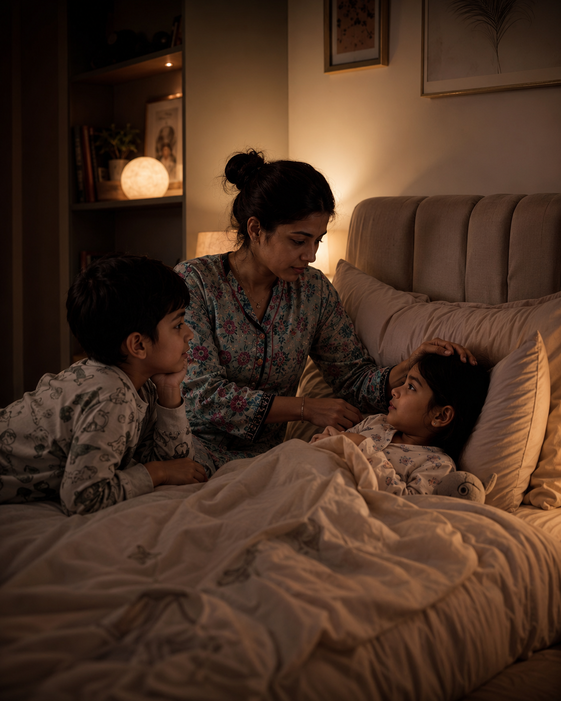
What Children Will Remember
Children may not remember every carefully planned birthday or perfectly organized home.
They may forget many of the details mothers worked tirelessly to create.
What often remains is emotional memory.
They remember whether home felt safe.
Whether laughter was allowed.
Whether questions were welcomed.
Whether mistakes became humiliation or instruction.
Whether their mother believed them.
Whether affection was conditional.
Whether they were permitted to become themselves.
This does not mean details are unimportant. Rituals, meals, celebrations, and practical care often become the language through which love is expressed.
But their deepest meaning lies in what they communicate.
A simple dinner can say, “You are cared for.”
A repeated family tradition can say, “You belong to something.”
A mother listening without interruption can say, “Your inner world matters.”
The Legacy Built in Ordinary Days
Motherhood’s greatest influence is rarely created through a single magnificent act.
It is built through repetition.
The morning reassurance.
The boundary maintained.
The apology offered.
The story read again.
The difficult conversation not avoided.
The decision to remain present when leaving emotionally would have been easier.
These moments accumulate.
They become character, expectation, memory, and eventually legacy.
A mother may never fully see the architecture she has created.
She may not witness every future decision shaped by her example, every relationship made healthier because of what her child learned at home, or every act of courage made possible by the belief she offered years earlier.
But her influence travels.
It enters classrooms, friendships, workplaces, marriages, communities, and future generations.
Motherhood is not simply the work of raising a child.
It is the work of helping form a human being who will one day enter the world carrying lessons about love, dignity, responsibility, courage, and belonging.
That is why the ordinary work matters so deeply.
Within the routines no one applauds, a future is being designed.
And within that future lives one of motherhood’s most profound truths:
A mother may hold her child for only part of a lifetime, but the emotional world she helps create can remain within that child forever.