
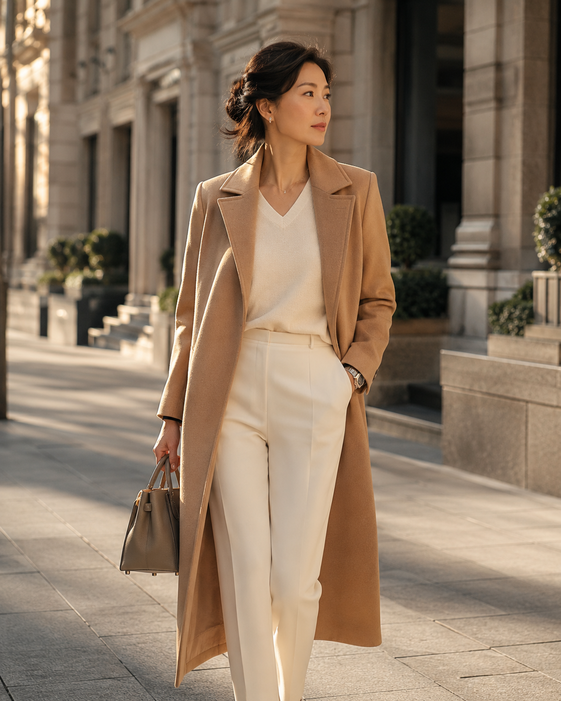
True style is not the pursuit of perfection. It is the visible expression of identity, confidence, culture, memory, and the life a woman has chosen to build.
Fashion changes quickly.
One season celebrates restraint; the next embraces abundance. Silhouettes rise and fall, colors return under new names, and yesterday’s forgotten detail becomes tomorrow’s essential statement.
Style moves differently.
It develops over time, shaped by experience rather than instruction. It reflects the cities a woman has lived in, the women who influenced her, the cultures she carries, the work she performs, the responsibilities she manages, and the version of herself she is still becoming.
A wardrobe may contain clothing, but personal style contains a story.
It communicates before a woman speaks. It reveals something about how she wishes to enter the world—not necessarily to gain approval, but to inhabit her own presence with greater intention.
The most compelling style is not created by following every trend.
It is created when appearance and identity begin to recognize one another.
Beyond the Pressure to Be Perfect
Women are surrounded by images of impossible polish.
Every detail appears controlled. Every room is immaculate. Every outfit is precisely composed. Every face seems untouched by fatigue, age, responsibility, or ordinary life.
These images may be beautiful, but they can also quietly transform inspiration into inadequacy.
Personal style should not become another standard women must fail to meet.
A woman does not need a limitless wardrobe, a particular body, or access to luxury labels to possess elegance. She does not need to appear perpetually young, fashionable, or camera-ready.
Style is not perfection.
It is discernment.
It is the ability to recognize what feels authentic, what serves one’s life, and what deserves a place within it.
A beautifully tailored jacket worn repeatedly may communicate more confidence than a closet filled with garments chosen for someone else’s approval.
A signature color may become more memorable than an entire season of trends.
A woman who feels at ease in what she wears often appears more elegant than one imprisoned by the need to impress.
The Difference Between Fashion and Style
Fashion offers possibility.
It introduces new ideas, revives forgotten references, reflects cultural change, and allows people to experiment with identity.
But fashion is external. Style is personal.
Fashion asks, “What is current?”
Style asks, “What belongs to me?”
The two can coexist beautifully. A woman may enjoy new collections and emerging designers while remaining rooted in her own visual language.
The goal is not to reject trends, but to interpret them.
Not every popular silhouette deserves entry into every wardrobe. Not every celebrated color must become personal. Not every luxury item carries meaning simply because it is expensive.
A woman with a strong sense of style does not merely consume fashion.
She edits it.
She selects what strengthens her presence and leaves behind what obscures it.
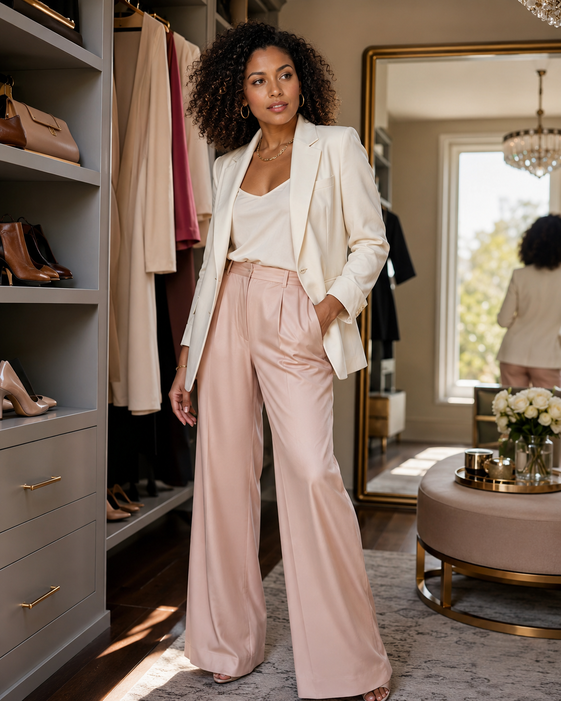
Clothing as a Form of Memory
Certain garments become inseparable from the moments in which they were worn.
A coat purchased before beginning a new career.
A dress worn to an important celebration.
A scarf inherited from a mother or grandmother.
A pair of shoes that accompanied a woman through a city she once dreamed of visiting.
These pieces carry emotional weight beyond their material value.
They become archives.
Clothing can preserve family history, cultural identity, personal triumph, and transformation. A traditional textile may connect a woman to generations she never met. A piece of jewelry may contain the memory of the person who gave it. A carefully preserved wedding garment may tell a story long after the ceremony ends.
This is one reason style can feel deeply intimate.
What a woman wears may reflect not only who she is, but also who loved her, where she came from, what she survived, and what she hopes to pass forward.
The Return of Intentional Dressing
Modern life encourages speed.
Clothing is purchased quickly, worn briefly, photographed, and replaced. The cycle can create abundance without attachment and variety without satisfaction.
Intentional dressing offers another approach.
It begins with understanding the life a wardrobe must support.
Does a woman move between professional meetings and family responsibilities? Does she travel frequently? Does she prefer softness, structure, simplicity, ornament, color, or restraint? Which fabrics feel most comfortable? Which silhouettes make her feel most fully herself?
A thoughtful wardrobe does not need to be large.
It needs coherence.
Each piece should contribute through function, beauty, versatility, or emotional significance. The strongest wardrobes are not necessarily the most expensive. They are the most considered.
Intentional style asks women to purchase less impulsively and select more meaningfully.
It values longevity over novelty.
It understands that elegance often emerges from repetition—the familiar coat, the signature jewelry, the beautifully maintained handbag, the trousers that always fit, the fragrance that becomes part of one’s presence.
Elegance Without Excess
Luxury is frequently associated with visibility.
Prominent branding, rare materials, exclusive access, and recognizable objects have long served as symbols of status.
Yet the most enduring elegance is often quieter.
It appears in the quality of fabric, the precision of a seam, the restraint of proportion, the confidence of simplicity, and the care with which something is maintained.
Quiet elegance does not require anonymity, but it does not depend upon recognition.
Its value remains even when no one else knows the price, designer, or origin.
This principle extends beyond clothing.
A thoughtfully arranged room, a handwritten note, a well-set table, a carefully selected book, or flowers placed with intention can all express refinement.
Luxury is not merely possession.
It is attention.
It is the decision to bring care, beauty, and dignity into ordinary life.
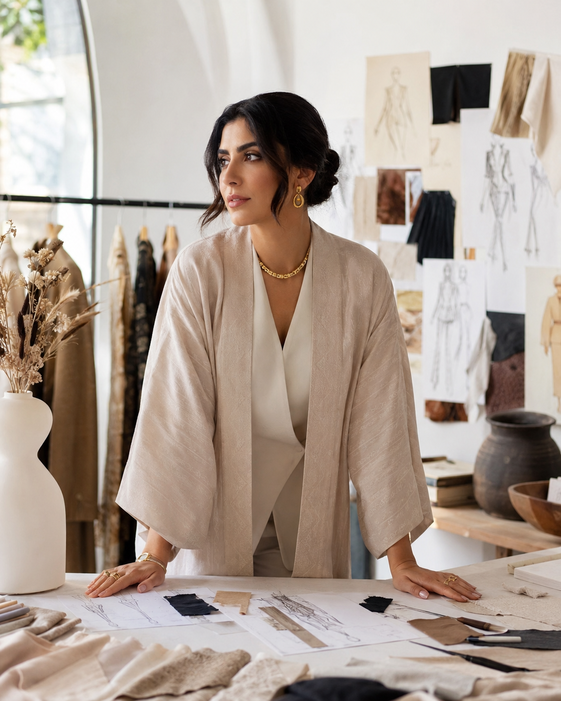
Style Through Every Stage of Womanhood
Women are often encouraged to treat style as though it belongs primarily to youth.
As bodies change and lives evolve, many women begin to feel that fashion no longer speaks to them—or that visibility itself should gradually be surrendered.
But style does not have an expiration date.
It may become more interesting with age because it is no longer shaped by the same urgency to conform.
A woman in her twenties may experiment widely as she discovers herself. A woman in her forties may understand the power of precision. A woman in her sixties or eighties may possess a visual authority built through decades of discernment.
Each stage offers its own beauty.
The goal is not to dress younger or older.
It is to dress truthfully.
A mature woman should not be required to disappear into neutrality unless neutrality is genuinely her preference. She may wear color, structure, sensuality, softness, bold jewelry, or dramatic silhouettes with the confidence of someone who no longer needs permission.
Style deepens when women stop dressing according to fear.
The Body Is Not the Problem
Much of the fashion industry has historically asked women to change their bodies in order to deserve beautiful clothing.
Garments are designed around narrow standards, while women are made to feel that fit problems represent personal failures.
But clothing should serve the body.
The body should not be punished for failing to serve the clothing.
A woman’s body may change through pregnancy, motherhood, illness, menopause, aging, stress, healing, or the ordinary movement of time. These changes do not remove her right to feel attractive, composed, and fully present.
Style becomes liberating when women stop waiting for a future body before allowing themselves beauty.
The right garment does not criticize.
It accommodates, celebrates, and supports.
Tailoring can transform not only the fit of clothing but also the experience of wearing it. So can choosing fabrics that move naturally, silhouettes that respect proportion, and designs that reflect rather than conceal personality.
Confidence is not created by pretending every insecurity has disappeared.
It is created by refusing to let insecurity make every decision.
Cultural Identity and Modern Expression
Style can be a powerful language of cultural continuity.
Traditional embroidery, jewelry, color symbolism, craftsmanship, and regional textiles carry histories that deserve preservation. When incorporated thoughtfully into modern dress, they can become bridges between heritage and contemporary life.
This expression must be approached with understanding.
Cultural design should not be reduced to decoration without context. Its origins, meanings, and makers matter.
For women who belong to more than one cultural world, style can become a space of integration.
A traditional textile may be paired with a contemporary silhouette. An inherited piece may be worn beside modern jewelry. A ceremonial color may enter everyday life in a quieter form.
The result is not costume.
It is continuity.
A woman can honor where she comes from without remaining visually confined to the past.
The Home as an Extension of Personal Style
The spaces women create often reveal the same instincts expressed through clothing.
Some are drawn to symmetry and calm. Others prefer layered texture, collected objects, saturated color, or architectural simplicity.
A meaningful home does not need to resemble a showroom.
It should reflect the people living within it.
Books may remain visible because they are used. Family photographs may coexist with contemporary art. A child’s drawing may occupy a place of honor beside a carefully selected sculpture.
True refinement is not sterile.
It allows life to be present.
The most memorable homes contain evidence of thought: a scent associated with the household, music that establishes atmosphere, objects gathered through travel, textiles connected to heritage, or a table arranged in a way that makes guests feel expected.
A beautiful home is not defined only by what it displays.
It is defined by what it allows people to feel.
Style and the Discipline of Editing
Developing personal style often requires subtraction.
Women accumulate garments, objects, habits, and expectations that no longer represent them. Some were purchased impulsively. Others belonged to earlier versions of their lives.
Editing creates clarity.
It asks:
Would I choose this today?
Does this still fit my body, life, and identity?
Do I keep it because I love it or because I feel guilty letting it go?
Does it add beauty, function, memory, or meaning?
The answers may be practical, but the process is deeply personal.
Releasing what no longer belongs creates space for greater intention.
This does not mean discarding every object associated with the past. Some pieces deserve preservation precisely because they contain history.
The purpose of editing is not emptiness.
It is alignment.
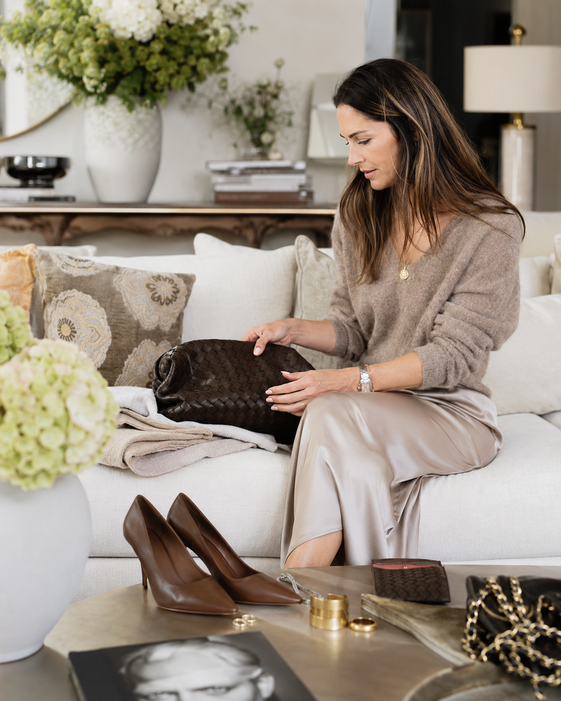
Beauty as a Daily Practice
Beauty is often reserved for special occasions.
The best tableware remains unused. The beautiful dress waits in the closet. The fragrance is saved. The flowers are considered unnecessary. The candle remains unlit.
But ordinary life constitutes most of life.
Beauty gains meaning when it enters the everyday.
Wearing the jewelry.
Using the fine cup.
Preparing the table carefully even when no guests are coming.
Choosing clothing that brings dignity to an ordinary workday.
Opening the curtains and allowing light into the room.
These actions are not superficial.
They communicate that daily existence is worthy of attention.
Beauty cannot resolve every difficulty, but it can create moments of steadiness within difficult seasons. It reminds women that care need not be reserved only for others or postponed until circumstances become perfect.
The Confidence of Being Recognizable
The most stylish women are not always those who change dramatically with every season.
Often, they are recognizable.
They possess a visual rhythm—a consistent palette, silhouette, texture, hairstyle, accessory, or sense of proportion that makes their presence feel distinct.
Recognition does not require repetition without imagination.
It requires identity.
A signature style can evolve while remaining coherent. It can become more refined, bolder, softer, or simpler without losing its essential character.
This is why personal style may become more powerful with time.
Every year teaches a woman what she no longer needs to prove.
She begins to understand which choices belong to her and which were made in response to pressure.
Eventually, style becomes less about assembling an image and more about revealing a truth.
A More Conscious Future for Fashion
Personal style also carries responsibility.
The fashion industry affects labor, resources, waste, and communities around the world. Women increasingly want to understand not only how clothing looks, but also how it was made.
Conscious style does not require moral perfection.
It begins with better questions.
Who made this?
Will I wear it repeatedly?
Can it be repaired?
Does the quality justify the purchase?
Am I supporting craftsmanship or only consuming novelty?
Vintage clothing, independent designers, responsible production, garment care, and local alteration can all become part of a more thoughtful approach.
The future of style should not demand endless accumulation.
It should invite appreciation.
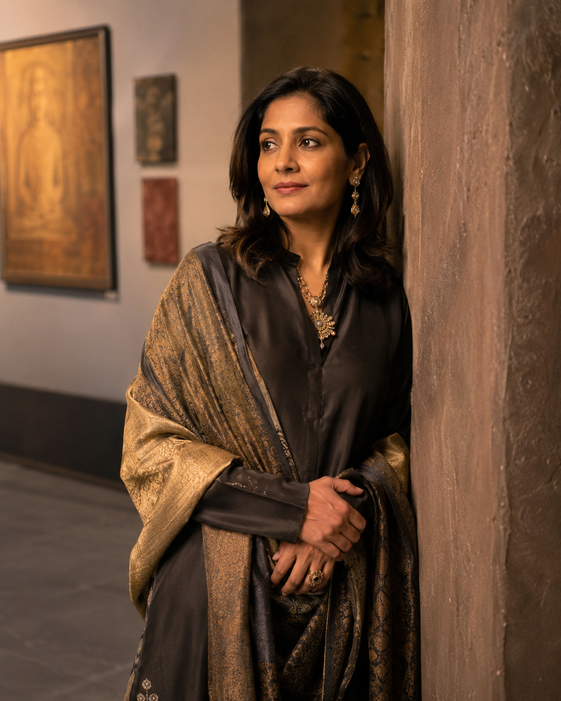
Dressing as an Act of Self-Definition
At its deepest level, personal style is not about clothing at all.
It is about self-definition.
It is the decision to choose consciously rather than live entirely through expectation.
A woman’s style may be minimal, romantic, architectural, dramatic, traditional, modern, artistic, or impossible to categorize.
Its value lies not in whether others approve.
It lies in whether she recognizes herself within it.
The new language of personal style is not built upon perfection, youth, or constant consumption.
It is built upon intention.
It honors the body as it exists today.
It respects heritage without becoming trapped by it.
It welcomes beauty into ordinary life.
It understands that elegance can be quiet, confidence can be soft, and identity can be visible without becoming performative.
Personal style begins when a woman stops asking what she is expected to wear and begins asking a more meaningful question:
How do I want to meet the world?
The answer may change across seasons and stages of life.
But when it is honest, it becomes more than fashion.
It becomes presence.