Leadership is no longer defined only by titles, institutions, or authority. It is increasingly shaped by courage, emotional intelligence, clarity of purpose, and the ability to create meaningful change.
For generations, leadership was presented through a narrow image: a formal title, a corner office, a public platform, or the authority to make decisions on behalf of others.
That image is changing.
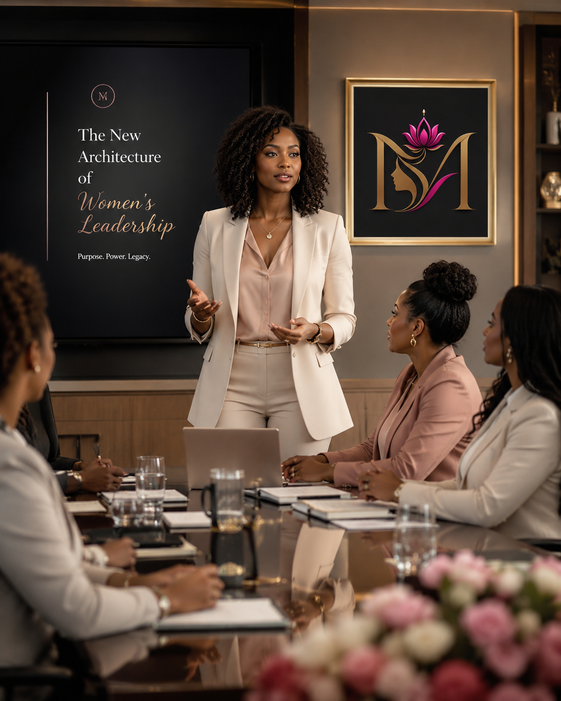
Women across the world are redefining leadership through the way they build businesses, guide families, advance medicine, educate communities, create culture, protect human dignity, and transform institutions from within.
Many lead publicly. Others lead quietly.
Some direct large organizations. Others care for children, support aging parents, mentor young professionals, establish community programs, or build companies from kitchen tables and modest beginnings.
Their circumstances may differ, but the foundation of their leadership is often the same: responsibility accepted with courage, influence exercised with integrity, and vision translated into action.
The modern woman leader is not simply entering traditional structures. She is helping redesign them.
Leadership Beyond Position
A title can grant authority, but it cannot guarantee leadership.
True leadership is revealed in the ability to bring clarity during uncertainty, remain principled under pressure, recognize potential in others, and make decisions that serve a purpose greater than personal advancement.
A woman does not need to be a chief executive, elected official, or public figure to lead.
She leads when she advocates for a child who cannot yet advocate for herself.
She leads when she creates employment through her business.
She leads when she challenges an outdated practice within her profession.
She leads when she speaks honestly in a room where silence would be easier.
She leads when she becomes the first person in her family to pursue higher education, build financial independence, or enter a field previously closed to women like her.
Leadership begins the moment responsibility is transformed into meaningful action.
The Strength of Emotional Intelligence
For many years, qualities such as empathy, attentiveness, vulnerability, and emotional awareness were treated as secondary to decisiveness and authority.
Today, their value is becoming increasingly evident.
Strong leaders must understand not only systems and strategies, but also people. They must recognize unspoken concerns, build trust, navigate conflict, and create environments in which individuals feel respected enough to contribute their best thinking.
Emotional intelligence does not weaken authority. It refines it.
A leader who listens carefully is better equipped to make informed decisions. A leader who understands the emotional climate of a team can address difficulties before they become crises. A leader who communicates with dignity can preserve trust even while delivering unwelcome news.
Women have often developed these abilities while navigating complex personal and professional environments. Many have learned to read a room before being invited to speak, prove competence before receiving recognition, and balance ambition with responsibilities that remain largely invisible.
Those experiences can become profound leadership assets.
Leading Without Losing Identity
Women are often encouraged to become more authoritative by adopting leadership styles created within institutions that did not originally include them.
They may be advised to speak differently, appear less emotional, minimize family responsibilities, soften ambition, or make themselves more acceptable to established expectations.
But leadership should not require self-erasure.
The most compelling women leaders are not imitations of those who came before them. They bring their own intelligence, culture, experience, conviction, and perspective into the spaces they occupy.
Authentic leadership does not mean revealing every private thought or refusing professional discipline. It means making decisions without abandoning one’s essential values.
A woman can be both compassionate and firm.
She can be elegant and formidable.
She can value family while pursuing exceptional professional ambition.
She can lead collaboratively without surrendering authority.
She can possess humility without diminishing her accomplishments.
The future of women’s leadership depends not merely on women gaining access to power, but on their freedom to exercise it without becoming unrecognizable to themselves.
Motherhood as Leadership
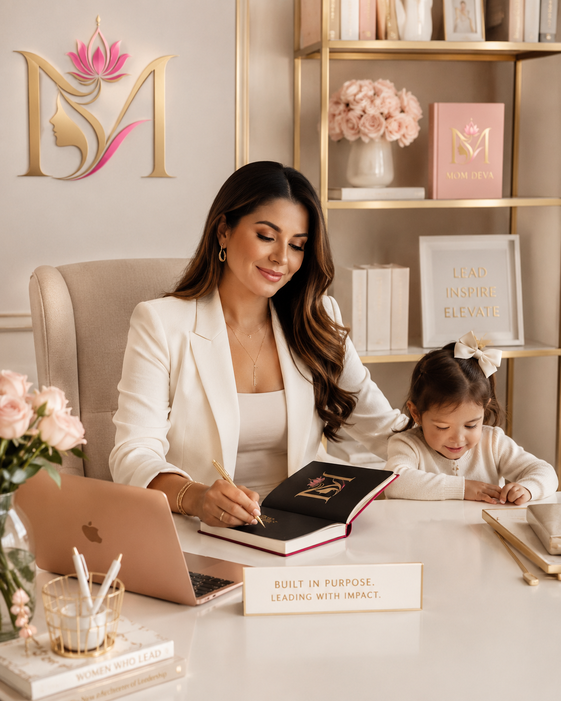
Motherhood is rarely described in the language of executive leadership, yet it requires many of the same abilities at an extraordinary level.
Mothers manage competing priorities, respond to unpredictable circumstances, make high-stakes decisions, resolve conflict, teach values, allocate resources, and remain accountable for the wellbeing of others.
They often perform this work without formal recognition, compensation, or institutional support.
Motherhood can sharpen resilience, patience, foresight, negotiation, and the ability to distinguish what is urgent from what is truly important.
For working mothers, leadership frequently involves navigating two demanding worlds at once. They may direct teams, manage clients, practice medicine, operate businesses, or serve communities while carrying the emotional and logistical responsibilities of family life.
This should not be interpreted as evidence that women can simply endure unlimited pressure.
Instead, it should inspire institutions to recognize caregiving as a source of valuable experience and to build professional environments in which women are not punished for having families.
A society that respects women’s leadership must also respect the conditions that make sustainable leadership possible.

The Courage to Be Visible
Visibility can be uncomfortable.
Women are frequently judged not only for what they accomplish, but also for how they look, speak, dress, age, parent, and present ambition.
As a result, some highly capable women hesitate to claim expertise, accept recognition, pursue leadership, or speak publicly about their achievements.
Yet visibility matters.
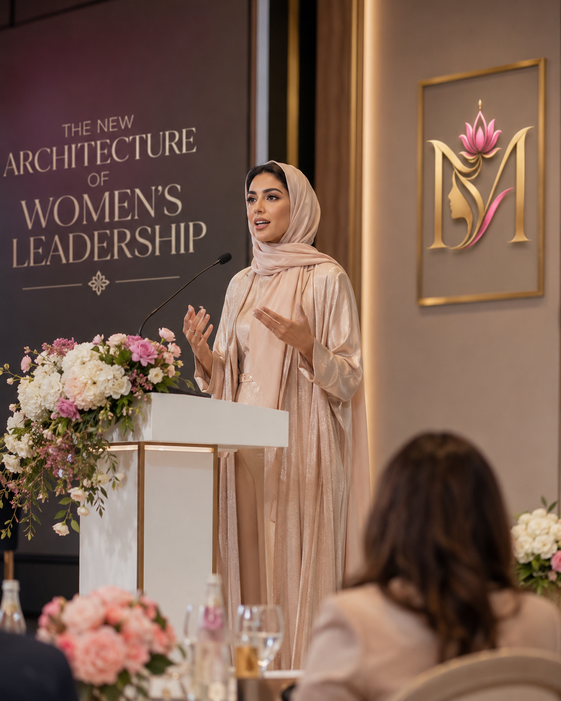
When women allow their work to be seen, they create evidence for those coming behind them. They expand the public imagination of who can lead and what leadership can look like.
A young woman who sees a female physician, founder, judge, engineer, artist, military officer, or executive may begin to understand that such a future is available to her.
Visibility is therefore not solely an individual benefit. It can become an act of collective advancement.
Women should not be required to become public personalities to prove their value. But they should feel entitled to speak about their work without apology and to receive recognition without discomfort.
Achievement does not become less honorable when it is acknowledged.
Building Rather Than Merely Belonging
Earlier generations of women fought for entry into institutions that excluded them.
That work remains unfinished, but today’s women leaders also face another responsibility: deciding what kind of institutions they wish to build.
It is not enough to gain a seat at a table if the table continues to reproduce the same inequities, limitations, and harmful expectations.
Leadership should create better conditions for those who follow.
This may involve mentoring women at earlier stages of their careers, advocating for equitable pay, supporting parents in the workplace, introducing ethical standards, investing in women-owned businesses, or ensuring that opportunity is not reserved for those already connected to influence.
A leader’s legacy is not measured only by how far she rises.
It is also measured by whether others are able to rise because she was there.
Collaboration Is Not the Opposite of Ambition
Women are sometimes presented with a false choice between personal success and collective support.
They are encouraged either to compete relentlessly or to diminish their ambition in the name of harmony.
Neither extreme is necessary.
Women can pursue excellence while creating opportunity for one another. They can compete with integrity, collaborate strategically, and celebrate another woman’s success without questioning their own potential.
A mature leadership culture recognizes that another woman’s achievement does not reduce the space available for others.
When women share knowledge, provide introductions, recommend qualified colleagues, invest in female founders, and speak each other’s names in rooms of opportunity, they help correct systems in which access has historically depended on informal networks.
Support becomes most powerful when it moves beyond encouragement and enters the realm of action.
Leadership in Times of Change
The world is moving through extraordinary transformation.
Technology is altering the nature of work. Families are facing new economic pressures. Communities are confronting political, cultural, environmental, and public-health challenges. Artificial intelligence is changing entire professions. Trust in institutions is being tested.
These conditions require leaders capable of combining imagination with responsibility.
Women must not be included only after the future has already been designed. They must participate in shaping it from the beginning.
Their voices are essential in conversations about healthcare, education, technology, economics, family policy, media, culture, and community development.
Decisions that affect women cannot continue to be made without women’s full participation.
Representation is not symbolic when it influences outcomes. It becomes structural.
The Legacy of a Woman Who Leads
Leadership is often discussed in terms of achievement, but its deepest measure may be found in legacy.
What changed because she accepted responsibility?
Who became more confident because she offered encouragement?
Which doors opened because she insisted on fairness?
What institution became more humane because she challenged an accepted practice?
Which child, employee, student, patient, colleague, or community member was strengthened by her example?
Not every leader will become widely known. Many of the most consequential women will never appear on magazine covers or stand beneath public spotlights.
Their influence will be visible in stronger families, healthier organizations, more courageous daughters, better-prepared teams, growing businesses, and communities that learned to expect more from themselves.
Leadership is not always dramatic.
Sometimes it is the quiet decision to continue when others depend upon your courage.
Sometimes it is the refusal to accept a limitation that has been presented as permanent.
Sometimes it is the willingness to create what does not yet exist.

A New Definition of Power
The future of women’s leadership will not be built solely by placing more women into existing positions.
It will be built by expanding the meaning of leadership itself.
Power can be used to control, but it can also be used to protect.
Influence can be accumulated, but it can also be shared.
Success can become a private achievement, or it can become a platform from which others are elevated.
The women shaping the future understand that leadership is not merely about being followed. It is about becoming responsible for what one’s influence makes possible.
The new architecture of women’s leadership is already being built—in boardrooms, homes, laboratories, schools, studios, hospitals, courtrooms, community organizations, and businesses of every size.
It is being built by women who refuse to choose between strength and humanity.
Women who understand that purpose must accompany ambition.
Women who know that leadership is not defined by occupying the highest position in the room, but by improving what becomes possible for everyone within it.